
Exercise guides
Shoulder Press Variations (+ Chart): 6 Overhead Presses Compared
Reviewed by the Crucible Fit team · Updated November 4, 2026 · 6 min read
Every shoulder press drives a weight overhead with the front and side delts and the triceps. The variations differ in how much overhead mobility they need, how heavy you can go, and how much your legs and core help.
If your shoulders are cranky, start with the landmine press, which pushes up and forward instead of straight overhead. If you want the most weight overhead, use the push press. For plain strict strength, the standing barbell press is the benchmark. The chart and quick picks below match each goal to a press.
Key takeaways
- All six train the front and side delts and triceps; they differ in mobility demand and load.
- The landmine press is the most shoulder-friendly, because it presses at an angle.
- Seated dumbbell presses let each arm find its own path.
- The push press uses leg drive, so it moves the heaviest loads.
- The Z press removes every bit of help from the legs and lower back.
Shoulder press variations at a glance
1 = needs good overhead mobility, 5 = kind to cranky shoulders
- Landmine pressShoulder-friendliness: 5 of 5
Presses on an angle, so the shoulder never goes fully overhead.
- Seated dumbbell pressShoulder-friendliness: 4 of 5
Each arm finds its own groove, and the bench supports your back.
- Arnold pressShoulder-friendliness: 3 of 5
The rotation adds range; keep it smooth.
- Standing military pressShoulder-friendliness: 2 of 5
A fixed bar path straight overhead.
- Push pressShoulder-friendliness: 2 of 5
Heavier loads locked out overhead.
- Z pressShoulder-friendliness: 1 of 5
Seated on the floor, so the shoulders have to supply all the range.
How the shoulder press variations compare
| Variation | Main muscles | Equipment | Difficulty | Best for | Load potential |
|---|---|---|---|---|---|
| Standing military press | Delts, triceps, core | Barbell, rack | Intermediate | Strict overhead strength | High |
| Seated dumbbell press | Front and side delts, triceps | Dumbbells, bench | Beginner-friendly | Shoulder size, easy learning | Moderate |
| Arnold press | Front delts, side delts | Dumbbells, bench | Intermediate | Front delt emphasis | Moderate |
| Landmine press | Front delts, upper chest, serratus | Barbell in a landmine | Beginner-friendly | Cranky shoulders | Moderate |
| Push press | Delts, triceps, legs | Barbell | Intermediate | Power and heavy lockouts | Highest |
| Z press | Delts, triceps, core | Barbell or dumbbells | Advanced | Strict strength, core control | Moderate |
Pair presses with an equal dose of pulling. Our guide to the types of rows covers the other half of a balanced upper body.
The 6 shoulder press variations
1. Standing barbell military press
Standing tall, you press a barbell from your upper chest to straight overhead. Your glutes and core keep you from leaning back, so it's as much a test of full-body tension as of shoulder strength. It's the standard measure of overhead strength.
- Grip just outside the shoulders with wrists stacked over forearms.
- Squeeze your glutes and brace hard before every rep.
- Keep the bar close to your face, then push your head through once it passes.
Common mistake: leaning back to turn it into an incline press. If your lower back arches, the weight is too heavy. Full setup: barbell standing military press.
2. Seated dumbbell shoulder press
Seated against an upright bench, you press two dumbbells overhead. Each arm moves on its own, so your shoulders can find a comfortable path, and the bench takes balance out of it. It's the easiest press to learn and a reliable builder of shoulder size.
- Keep your lower back against the bench and your feet planted.
- Forearms vertical, wrists straight, dumbbells stacked over your elbows.
- Lower until the dumbbells are about level with your chin or ears.
Common mistake: arching off the bench to finish the last reps. Keep your ribs down. Full setup: dumbbell seated shoulder press.
3. Arnold press
A seated dumbbell press that starts with your palms facing you and rotates them outward as you press. The rotation lengthens the range and puts more work on the front delts. Expect to use lighter dumbbells than for a regular seated press.
- Start with the dumbbells at chin height, palms toward you.
- Rotate smoothly through the whole press, not all at the top.
- Pause briefly at the bottom to take momentum out.
Common mistake: flaring the elbows wide early in the rep. Keep them in front while you rotate. Full setup: dumbbell Arnold press.
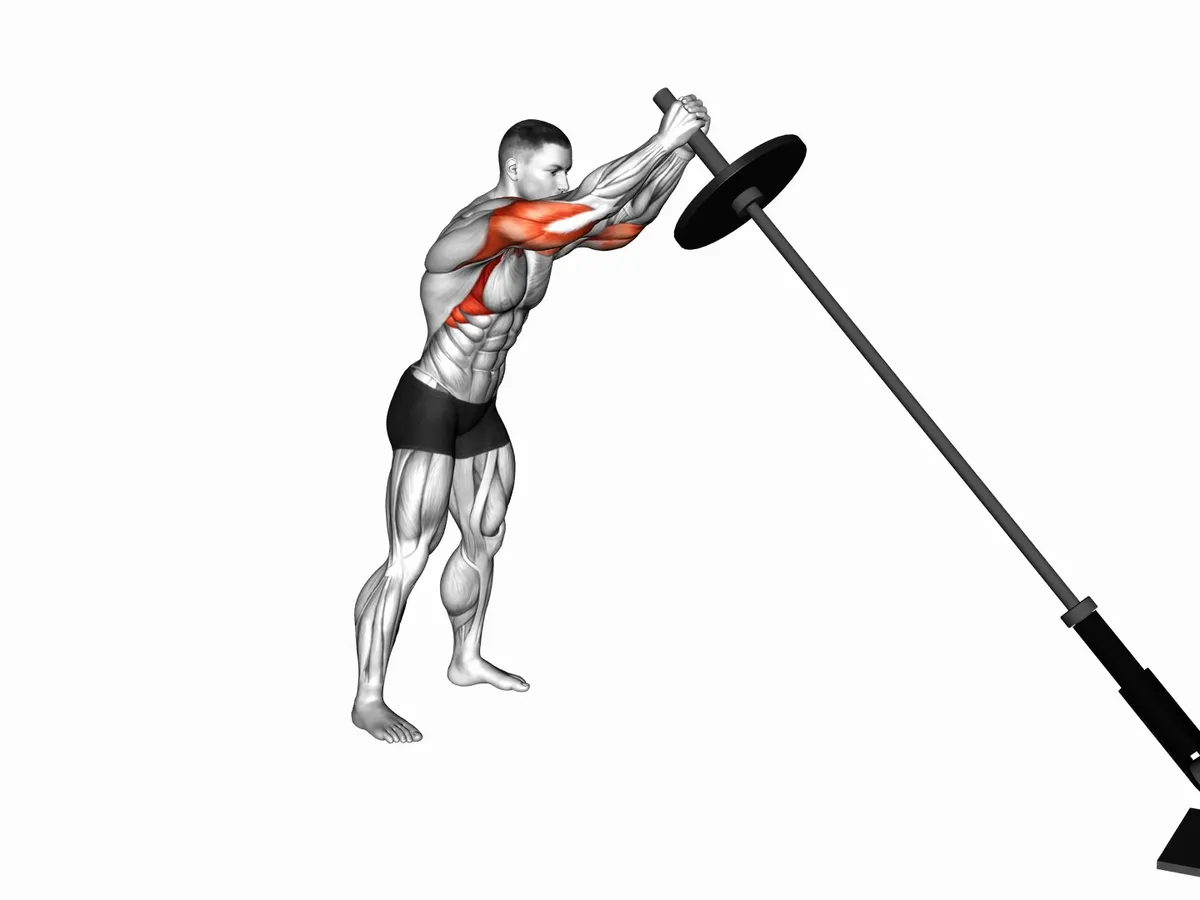
4. Landmine press
One end of a barbell is anchored in a landmine or a corner, and you press the other end up and forward. The angled path needs much less overhead mobility, and the forward reach trains the serratus, which helps keep shoulders healthy. If straight-overhead pressing hurts, start here.
- Stagger your stance and squeeze the glute of your back leg.
- Keep the elbow at about 45 degrees from your body.
- Reach the bar forward at the top, letting the shoulder blade move with it.
Common mistake: twisting the torso to push the bar. Keep your hips and shoulders facing forward. Full setup: landmine press.
5. Push press
A short, fast dip and drive through the legs launches the bar, and your arms finish the press. Leg drive lets you handle more weight than a strict press, so it builds power and gets your shoulders and triceps used to heavy lockouts.
- Dip straight down a few inches, keeping your torso vertical.
- Drive hard through your heels, then punch the bar up as your legs straighten.
- Finish with arms locked, biceps by your ears and the bar over your mid-foot.
Common mistake: dipping too deep or letting the chest fall forward, which sends the bar out in front. Keep the dip short. Full setup: push press.
6. Z press
You sit on the floor with your legs straight and press overhead with no back support. Your legs and lower back can't help, so any lean shows up immediately. It's humbling, and it's an excellent test of strict pressing strength and trunk control.
- Legs straight and flexed, toes pulled toward you.
- Sit tall and press in a straight vertical line.
- If you can't sit upright, sit on a plate or use dumbbells first.
Common mistake: leaning back to get under the bar. If you can't stay vertical, drop the weight. Full setup: barbell Z press.
How to program the shoulder press
- Pick one main press for strength (military press or push press) for sets of 3 to 6.
- Add one dumbbell or landmine press for 8 to 12 reps to build size with less joint stress.
- Balance every pressing set with at least one rowing or pulling set.
- If a press hurts, move toward the landmine end of the chart rather than pushing through.
Crucible Fit handles the balance and the progression. Every Crucible comes in bodyweight, dumbbell and kettlebell versions, so your press matches your kit, and it raises your rep targets as you improve. Your first Crucible is on us: get Crucible Fit on the App Store.
Frequently asked questions
- Which shoulder press is best for beginners?
- The seated dumbbell shoulder press. The bench supports your back, each arm finds its own path, and the dumbbells are easy to load lightly. The landmine press is a good alternative if overhead pressing is uncomfortable.
- Is the Arnold press better than a regular shoulder press?
- It isn't better, it's different. The rotation adds range and front-delt work but means lighter weights. Use a regular press for strength and the Arnold press as a second exercise for shoulder size.
- Is the military press the same as the overhead press?
- In everyday gym use, yes. Strictly, a military press is done standing with the heels together, but most people use the term for any strict standing barbell press.
- Why does overhead pressing hurt my shoulders?
- Often because of limited overhead mobility or the bar path. Try the landmine press or a neutral-grip dumbbell press, which need less range. If pain persists, see a physiotherapist before pressing heavy overhead.
- Is the push press cheating?
- No. It's a different exercise with a different goal. The leg drive lets you handle heavier loads and train power. It doesn't replace strict pressing for building strength through the whole range.