
Exercise guides
Types of Rows (+ Chart): 8 Row Variations and When to Use Each
Reviewed by the Crucible Fit team · Updated November 4, 2026 · 8 min read
Every row trains the same thing: pulling a load toward your torso with your lats, mid-back and rear shoulders. What changes between variations is how much your lower back has to hold you in place, how heavy you can go, and what equipment you need.
If your lower back is the limit, use a chest-supported or cable row. If you want to load the back as heavily as possible, use a barbell row. If you have only a door frame or a set of rings, use an inverted row. The chart and quick picks below match each goal to a variation.
Key takeaways
- All rows train the lats, mid-back and rear delts; the variation decides how much your lower back works.
- Chest-supported, cable and inverted rows take the lower back almost out of it.
- Barbell and Pendlay rows let you go heaviest but ask the most of your hinge.
- Single-arm dumbbell and landmine rows fix side-to-side differences.
- Pull with the elbow toward the hip, not the hand toward the chest.
Row variations at a glance
1 = barely involved, 5 = holds you up all set
- Chest-supported rowLower-back demand: 1 of 5
The bench takes the load off your spine.
- Inverted rowLower-back demand: 1 of 5
A straight-body plank; the core works, the lower back barely does.
- Seated cable rowLower-back demand: 2 of 5
Seated and upright, as long as you don't rock.
- Single-arm dumbbell rowLower-back demand: 2 of 5
Your free hand and knee on a bench share the load.
- Landmine rowLower-back demand: 3 of 5
Bent over, but the arc and a free hand on your thigh help.
- Barbell rowLower-back demand: 4 of 5
You hold a 45-degree hinge for the whole set.
- Underhand barbell rowLower-back demand: 4 of 5
Same hinge as the barbell row, with more biceps.
- Pendlay rowLower-back demand: 5 of 5
Torso parallel to the floor, and every rep starts from a dead stop.
How the row variations compare
| Variation | Main muscles | Equipment | Difficulty | Best for | Load potential |
|---|---|---|---|---|---|
| Single-arm dumbbell row | Lats, mid-back | Dumbbell, bench | Intermediate | Evening out sides | Moderate |
| Barbell row | Lats, traps, mid-back | Barbell | Intermediate | Overall back strength | High |
| Underhand barbell row | Lats, biceps | Barbell | Intermediate | Lower lats and arms | High |
| Pendlay row | Lats, traps, mid-back | Barbell, plates | Intermediate | Pulling power from the floor | High |
| Seated cable row | Lats, mid-back | Cable stack | Beginner-friendly | Steady tension, easy setup | Moderate |
| Inverted row | Lats, mid-back, core | Rings, straps or a bar | Beginner to advanced | Home and travel | Bodyweight |
| Chest-supported row | Lats, rhomboids, traps | Dumbbells, incline bench | Beginner-friendly | Back work with a tired lower back | Moderate |
| Landmine row | Lats, mid-back | Barbell in a landmine | Intermediate | One-arm loading with a stable arc | Moderate to high |
All eight count as horizontal pulls. If you pair them with a vertical pull such as a pull-up or pulldown, you cover the back from both angles. Our guide to choosing a workout split shows where each pull fits in a training week.
The 8 row variations
1. Single-arm dumbbell row
One hand and knee on a bench, the other arm rows a dumbbell. The support makes it easy on the lower back, and working one side at a time shows you which side is weaker. It's the most useful row for a home setup with adjustable dumbbells.
- Stack your supporting shoulder over your wrist and keep your back flat like a tabletop.
- Pull the dumbbell toward your hip, not your chest, and drive the elbow toward the ceiling.
- Let the shoulder blade reach forward at the bottom for a full stretch.
Common mistake: twisting your torso open to heave the weight up. If your chest rotates toward the ceiling, the weight is too heavy. Full setup: dumbbell single-arm bent-over row.
2. Barbell bent-over row
The classic heavy row. You hinge to about 45 degrees and row the bar to your lower ribs with an overhand grip. Both arms work together, so it takes the most weight of any row here, and holding the hinge trains your lower back and hamstrings too.
- Bar over mid-foot, grip a little wider than shoulders, knees soft, core braced.
- Keep your torso still and drive your elbows past your body.
- The bar travels straight up and down, close to your thighs.
Common mistake: standing up a little more on every rep until it becomes a shrug. Keep the torso angle fixed. Full setup: barbell bent-over row.
3. Underhand barbell row
The same hinge as the barbell row with a palms-up, shoulder-width grip. Your elbows stay closer to your sides, which shifts work toward the lower lats and brings in more biceps. Many people find they can row slightly more this way.
- Deadlift the bar up first, then hinge to about 45 degrees.
- Tuck your elbows close to your ribs and pull toward your belly button.
- Pull your shoulder blades back before your arms bend.
Common mistake: turning it into a curl. If your elbows stay in front of your body, the biceps are doing the work. Full setup: barbell underhand bent-over row.
4. Pendlay row
Torso parallel to the floor, and the bar returns to the floor between every rep. Each rep starts from a dead stop, so there is no stretch to bounce out of, and the pull has to be fast. It builds explosive pulling strength, and it sits at 5 of 5 on the lower-back chart above.
- Hinge until your back is flat and level with the floor before the first rep.
- Rip the bar off the floor and pull it to your lower chest.
- Set it down fully and reset your back before the next rep.
Common mistake: letting the hips rise and the chest lift to finish the rep. If hamstring tightness rounds your back, raise the bar on low blocks. Full setup: barbell Pendlay row.
5. Seated cable row
Sitting upright with your feet braced, you row a handle from a low pulley. The cable keeps tension on the muscle through the whole rep, and changing the weight takes a second. It's an easy row to learn and a good one for higher-rep sets.
- Sit tall with a slight bend in the knees and a proud chest.
- Start each rep by pulling your shoulder blades back, then bend the arms.
- Keep your shoulders down, away from your ears.
Common mistake: rocking back and forth to move more weight. Your torso should barely move. Full setup: cable seated row.
6. Inverted row (rings or straps)
You hang under rings, straps or a low bar and row your body up to your hands. Walking your feet forward makes it harder; standing more upright makes it easier, so it scales from first-time beginner to strong lifter. A sturdy table works at home.
- Keep a straight line from head to heels, with glutes and core tight.
- Pull until your chest reaches the handles.
- Keep your shoulders down; don't shrug toward the rings.
Common mistake: letting the hips sag and thrusting them up to finish. Make the angle easier instead. Full setup: inverted row with straps.
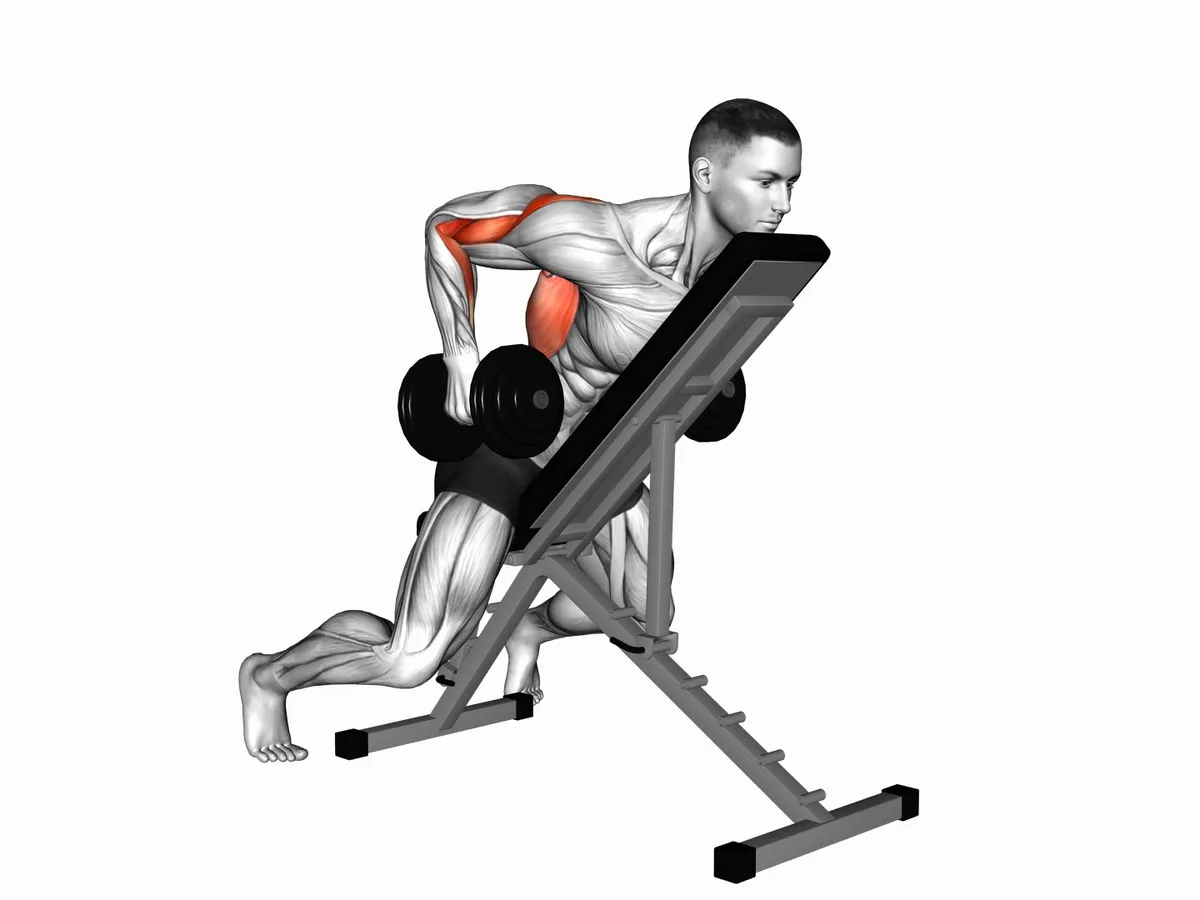
7. Chest-supported dumbbell row
Lying face down on a 30 to 45-degree incline bench, you row two dumbbells. The bench stops you from cheating, and your lower back does almost nothing. Use it after heavy deadlifts or squats, or whenever your back is the part that's tired.
- Keep your chest on the pad from the first rep to the last.
- Pull toward your back pockets, driving with the elbows.
- Let the dumbbells draw your shoulder blades forward at the bottom.
Common mistake: lifting the chest off the pad to finish heavy reps. Once the chest lifts, the support is doing nothing. Full setup: dumbbell row with chest support.
8. Landmine one-arm row
One end of a barbell sits in a landmine or corner, and you row the loaded end with one hand. The bar moves in a fixed arc, which makes heavy single-arm work feel stable, and it loads more than most dumbbells allow.
- Stand side-on to the bar, hinge until your torso is nearly parallel, and brace a free hand on your thigh.
- Pull toward your hip and keep your shoulders square to the floor.
- Use smaller plates for a longer range of motion.
Common mistake: rotating the torso toward the working arm. Keep your chest facing the floor. Full setup: landmine one-arm bent-over row.
How to program rows
- Row at least as much as you press. Match every pressing set in your week with a rowing set, or add a few more.
- Go heavy with barbell and Pendlay rows for sets of 5 to 8, early in the session while your hinge is fresh.
- Use cable, chest-supported and dumbbell rows for 8 to 15 reps later in the session.
- When your lower back is tired, swap a bent-over row for a chest-supported or cable row rather than skipping the pull.
Crucible Fit builds that balance in for you. Every Crucible comes in bodyweight, dumbbell and kettlebell versions, so the pull you get matches the kit you own: an inverted row with nothing, a dumbbell row with dumbbells. It raises your rep targets as you improve. Your first Crucible is on us: get Crucible Fit on the App Store.
Frequently asked questions
- What is the best type of row for back growth?
- There is no single best row. Barbell rows let you use the most weight, and chest-supported and cable rows let you take sets close to failure without your lower back giving out first. Most people grow well with one heavy row and one supported row each week.
- Is the barbell row or the dumbbell row better?
- The barbell row loads more weight and trains your hinge at the same time. The single-arm dumbbell row is easier on the lower back and works each side on its own. Use the barbell row for strength and the dumbbell row to fix imbalances or when your back is tired.
- What is the difference between a Pendlay row and a barbell row?
- In a Pendlay row your torso is parallel to the floor and the bar returns to the floor after every rep, so each pull starts from a dead stop. A barbell row is done at about 45 degrees with the bar staying in your hands. The Pendlay row is more explosive and harder on the lower back.
- Which row is easiest on the lower back?
- The chest-supported row, because the bench holds your torso. The inverted row and the seated cable row are close behind, as long as you don't rock or let your hips sag.
- Do underhand rows work the biceps?
- Yes, more than overhand rows. The palms-up grip and tucked elbows bring the biceps in, and they shift emphasis toward the lower lats. Your back still does most of the work if you pull with the elbows.